
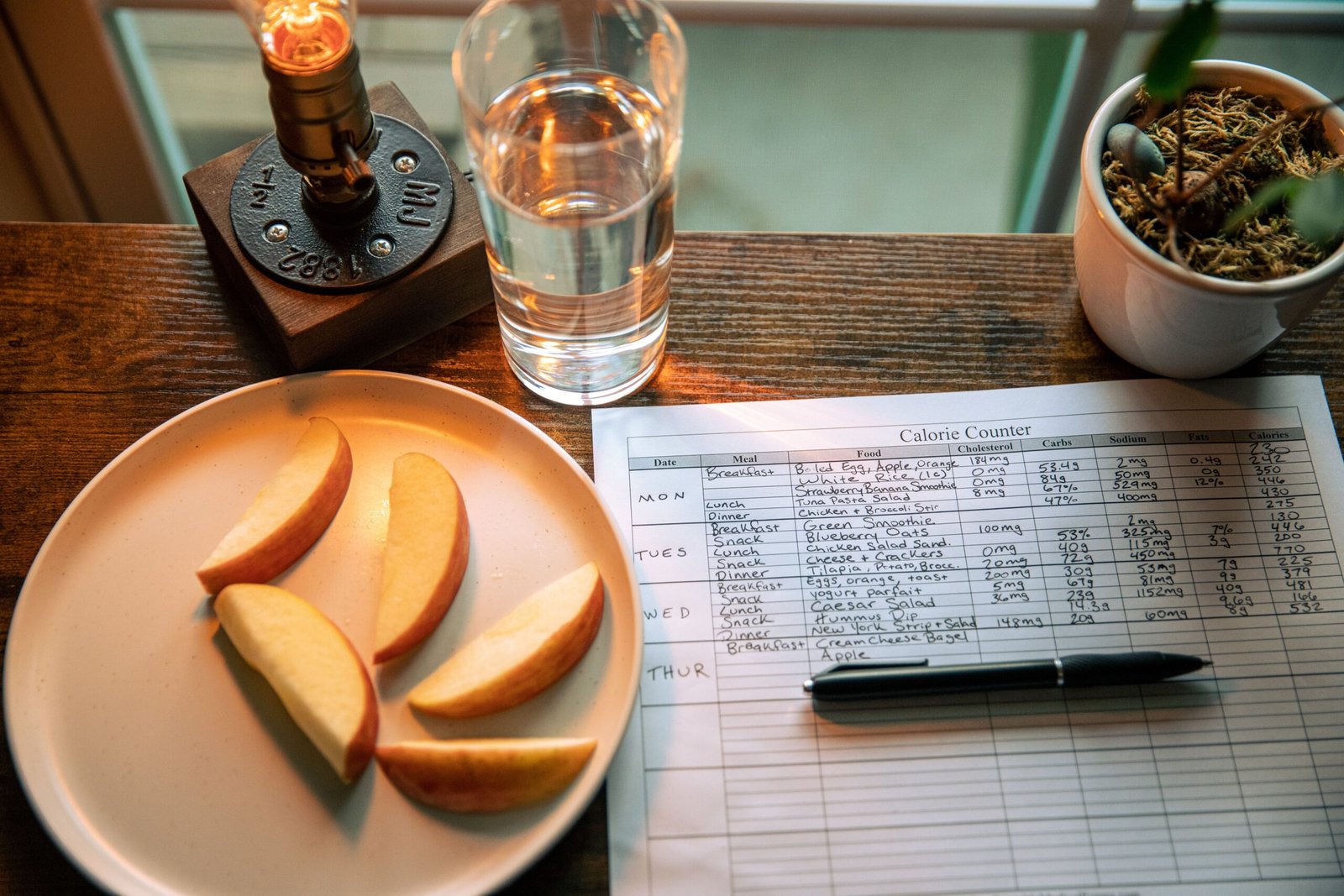
That “2,000 calories a day” printed on every food label? It was never meant to be your number. It’s a rough average picked for labelling, and plenty of people need hundreds of calories more or less than that.
Your TDEE is the figure that actually matters. Pop your age, height, weight and activity into the calculator above, and you’ll get a decent estimate in seconds. The rest of this page explains where that number comes from, where it tends to go wrong, and what I’d do with it.
What TDEE means
TDEE stands for Total Daily Energy Expenditure. It’s the total number of calories you burn in a day. Most of that burn happens without you noticing. Your heart, brain, liver and lungs run around the clock, and that background cost (your BMR, or basal metabolic rate) usually makes up well over half of your day’s total. On top of that, you spend a little energy digesting meals, some on everyday movement like walking to the car or standing at the stove, and some on actual exercise.
People tend to overrate that last part. An hour at the gym feels huge, but for a lot of office workers it’s a smaller slice of the day’s burn than all the walking, standing and moving around they do without thinking.
One mix-up worth clearing up early: BMR is not your daily target. It’s what you’d burn if you stayed in bed all day. Eat only that and you’re underfeeding yourself, often by 500 calories or more.
The math behind the calculator
Every TDEE calculator I’ve come across works the same way under the hood. First it estimates your BMR from a formula. Then it multiplies that by an activity factor. That’s it.
The formula matters more than you’d think, and my pick is Mifflin-St Jeor. It was published in 1990, and in a 2005 review of several equations it came out as the most accurate for healthy adults. Here it is, with weight (W) in kilograms, height (H) in centimetres and age (A) in years:
\text{Men: } BMR = 10W + 6.25H – 5A + 5
\text{Women: } BMR = 10W + 6.25H – 5A – 161
You’ll also see the Harris-Benedict equation on older sites. It dates from 1919 (revised in 1984) and still works fine, though it usually comes out a little high. If two calculators give you different answers, this is often why.
There’s a third option, Katch-McArdle, which uses lean body mass rather than total weight: BMR = 370 + (21.6 × lean mass in kg). Bodybuilders love it. I’d only use it if your body fat figure comes from something better than a bathroom scale, because a wrong body fat percentage throws the whole result off.
The activity level problem
Here’s where most results go sideways. Not the formula. The dropdown.
| Multiplier | Level | Roughly what it means |
|---|---|---|
| 1.2 | Sedentary | Mostly sitting, little or no exercise |
| 1.375 | Lightly active | Some exercise 1–3 days a week |
| 1.55 | Moderately active | Exercise 3–5 days a week |
| 1.725 | Very active | Hard training 6–7 days a week |
| 1.9 | Extremely active | Physical job and hard daily training |
The labels only talk about workouts, but your job and your daily steps count just as much. A desk worker who trains four times a week and a waiter who never sets foot in a gym could easily land on the same level.
My advice is simple. When you’re torn between two options, take the lower one. Overestimating is far more common, and it quietly wipes out the deficit people think they’re in.
Example: a nurse on 12-hour shifts
Take a 28-year-old nurse. She’s 160 cm (5’3″), weighs 72 kg (159 lb), works three long shifts a week and doesn’t go to the gym.
Her BMR with Mifflin-St Jeor: 720 + 1,000 − 140 − 161 = 1,419 calories.
Now the tricky bit. On paper she “doesn’t exercise,” so she might click sedentary and get 1,703. That would be a mistake. Twelve hours on her feet, walking the ward, lifting patients. Those shifts are hard physical work. Three of them a week fits lightly active far better, which gives 1,419 × 1.375 = about 1,950 calories.
That’s nearly 250 calories a day of difference from one dropdown. Over a month, it’s the gap between steady progress and wondering why nothing is happening.
Working in pounds and inches? Divide pounds by 2.205 for kg, and multiply inches by 2.54 for cm.
What to do with your number
Think of your TDEE as zero on a dial. Eat below it and you lose weight; eat above it and you gain.
To lose fat, I’d eat around 15% under your TDEE to begin with. For our nurse, that’s roughly 1,650 calories a day, which works out to around half a pound (0.25 kg) a week. It’s not dramatic. It is sustainable, and that matters more than speed. Most health organisations also advise against going under about 1,200 calories a day for women or 1,500 for men without a doctor involved.
To hold your weight, eat at your TDEE. Don’t skip this phase if you’ve just finished a diet. A few months of maintenance makes the weight you lost far more likely to stay off.
To build muscle, a small surplus of 5 to 10% is plenty, alongside regular strength training and enough protein. Eat much more than that and you’ll gain fat faster than muscle.
When the number is wrong (and how to fix it)
I’ll be honest: your calculator result is a guess. A good one, usually within about 10% for healthy adults, but still a guess. Muscle, daily step count, thyroid issues, certain medications, and months of past dieting can all push your real burn away from the estimate. Pregnancy and the teenage years aren’t covered by these formulas at all.
The good news is that you don’t need a lab to find your true number. You need a scale and a bit of patience.
Eat at your target for two or three weeks and log your food as honestly as you can. Weigh yourself most mornings and average the readings each week. Ignore single days; a curry dinner or a hard leg session can add a kilo of water overnight.
If the weekly average isn’t moving the way you want, change your intake by 100 to 200 calories and give it another fortnight. After a couple of rounds, you’ll know your real TDEE better than any calculator could tell you.
Final thoughts
Use the calculator to get your starting number, be strict with yourself on the activity level, and then let a few weeks of real data correct it. That’s honestly all there is to it. The people who get results aren’t the ones with the perfect formula. They’re the ones who pick a sensible number and stay consistent long enough to learn from it.
Disclaimer
This page and the TDEE calculator are for general information only. They aren’t medical advice and don’t replace guidance from a doctor, registered dietitian or other qualified health professional. Talk to one before making major changes to your diet, particularly if you have a medical condition, are pregnant or breastfeeding, are under 18, or have a history of disordered eating.
References
-
- Mifflin MD, St Jeor ST, et al. A new predictive equation for resting energy expenditure in healthy individuals. American Journal of Clinical Nutrition, 1990.
-
- Roza AM, Shizgal HM. The Harris Benedict equation reevaluated. American Journal of Clinical Nutrition, 1984.
-
- Frankenfield D, et al. Comparison of predictive equations for resting metabolic rate in healthy nonobese and obese adults: a systematic review. Journal of the American Dietetic Association, 2005.